GLAUCOMA “The Silent Thief of Sight

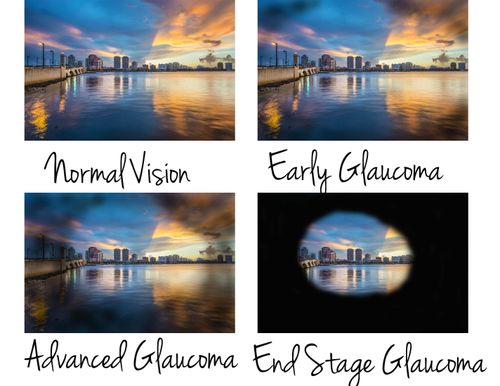
Glaucoma is a group of eye diseases that lead to damage of the optic nerve, which transmits visual information from the eye to the brain. Glaucoma may cause vision loss if left untreated. It has been called the "silent thief of sight" because the loss of vision usually occurs slowly over a long period of time.
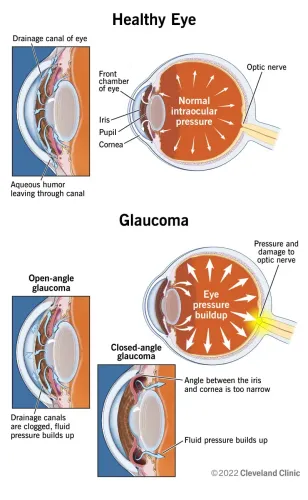
It a chronic optic neuropathy with characteristic structural and functional changes in the optic nerve head. A major risk factor for glaucoma is increased pressure within the eye, known as intraocular pressure (IOP). A normal intraocular pressure is essential to maintain the shape of the eye and visual function. With prolonged elevation in IOP results in irreversible damage to the optic nerve. Detecting the IOP is essential in not only initiating treatment, but also in monitoring the response to treatment.
High internal eye
pressure (intraocular pressure)
Family history of glaucoma
Black, Asian or Hispanic heritage
Age 40 years and older
Thin cornea
Extreme nearsightedness or farsightedness
Certain medical conditions such as diabetes, hypertension, migraines
Eye injury or certain types of eye surgery
Taking corticosteroid medicines, especially eye drops for a long time
Glaucoma is the third leading cause of blindness, accounts for 15% of the burden of blindness worldwide. Glaucoma affects more than 67 million people in the world, and the prevalence is about 3.57% in the population aged over 40 years.
Diagnosis is often made at the late stage of the condition when much damage to the eye has already occurred. Raising the public level of awareness through public education for periodic eye checks is one of the effective measures for its early detection and management.
There are different types of glaucoma, but the most common are called open-angle glaucoma and closed-angle glaucoma. Inside the eye, a liquid called aqueous humor helps to maintain shape and provides nutrients. The aqueous humor normally drains through the trabecular meshwork. In open-angle glaucoma, the draining is impeded, causing the liquid to accumulate and pressure inside the eye to increase. This elevated pressure can damage the optic nerve.
The patient with open-angle glaucoma is often asymptomatic until the optic nerve damage is severe unless signs of early glaucoma are recognized on a routine eye exam. However, it may gradually progress to involve difficulties with peripheral vision. In closed-angle glaucoma, the drainage of the eye becomes suddenly blocked, leading to a rapid increase in intraocular pressure. This may lead to severe eye pain, headache, nausea, vomiting, red eye, sudden vision disturbances and seeing colored halos around light. Closed-angle glaucoma is an emergency requiring immediate attention.
If treated early, it is possible to slow or stop the progression of glaucoma. Regular eye examinations, especially if the person is over 40 or has a family history of glaucoma, are essential for early detection. Treatment typically includes prescription of eye drops, medication, laser treatment or surgery. The goal of these treatments is to decrease eye pressure.
Gaindakot-10, Nawalpur
+977 78 502004
info@timepharma.com
10 am to 5 pm
© 2025 Time Pharmaceuticals. All rights reserved.


